In Laikipia’s rangelands, meals are shaped by movement. What is cooked depends on where cattle are grazing, how far water must be fetched, and how long the rains have held. Food here is not about recipes written down. It is about the knowledge carried.
In pastoralist households across Laikipia — Samburu, Maasai, and other communities — cooking begins long before the fire is lit. It starts with decisions about livestock, milk sharing, and timing. Milk is fermented when there is an abundance. Meat is prepared carefully and sparingly, often reserved for ceremonies, visitors, or moments of need.
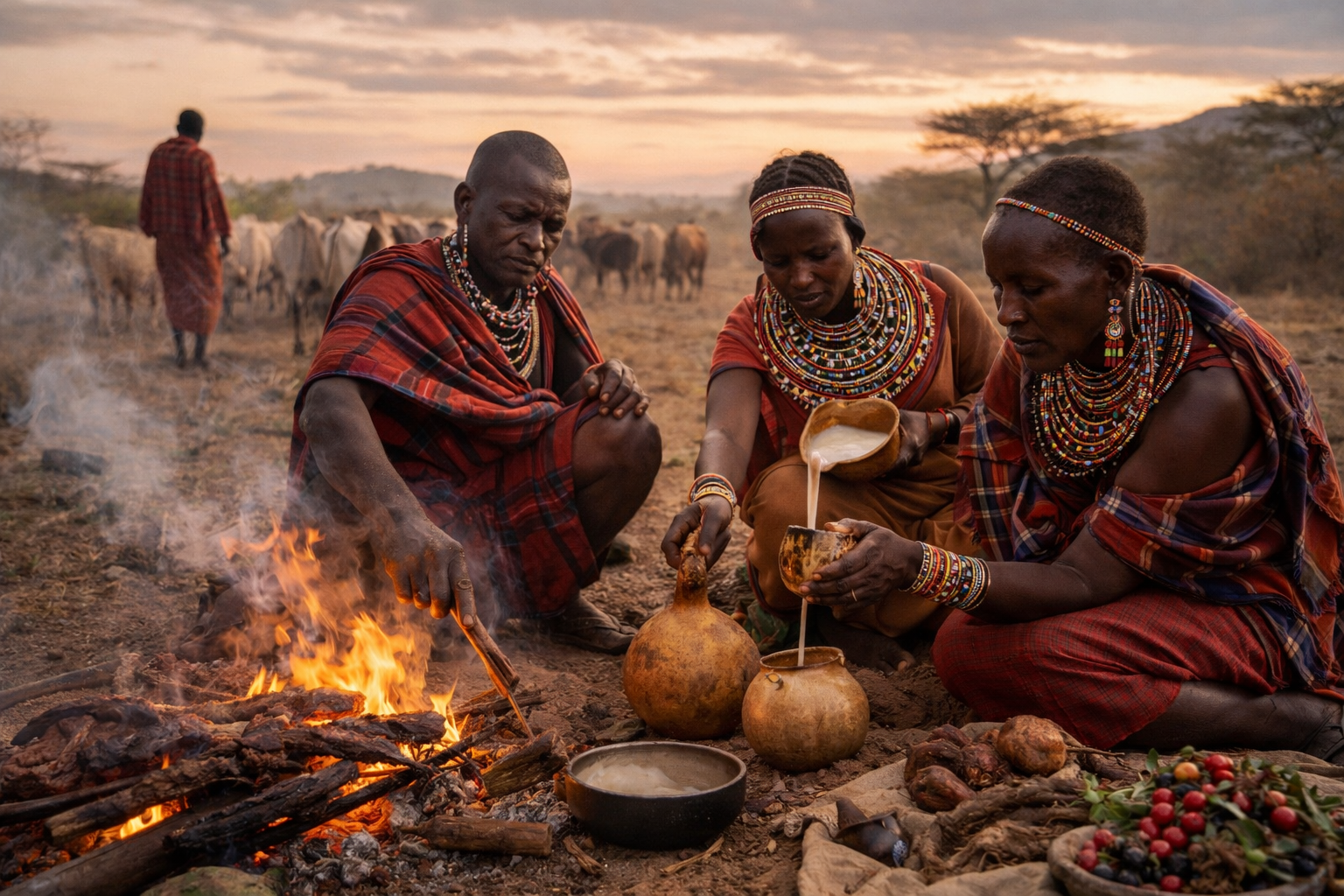
One of the most recognisable staples is fermented milk, stored in gourds treated with special herbs that give it a smoky, tangy flavour. The process preserves nutrition and extends shelf life in a landscape where refrigeration has never been guaranteed. The taste is unfamiliar to many visitors, but to local families, it signals sustenance and continuity.
Meat preparation is equally intentional. Goat and beef are slow-roasted over open fires or boiled simply, seasoned lightly to let the flavour of the animal speak. Nothing is wasted. Bones are simmered for strength-giving broths. Fat is rendered and stored for later use. These practices reflect a deep respect for livestock — not as commodities, but as partners in survival.
Wild foods also play a role. During certain seasons, communities gather wild berries, roots, and honey, knowledge passed down through elders who understand what can be harvested without harming future growth. Honey, in particular, holds cultural and nutritional value, used both as food and medicine.
As climate patterns change, food traditions in Laikipia are adapting. Extended droughts have reduced milk yields and altered grazing routes. In response, some households supplement traditional diets with grains and vegetables sourced through local markets, while still holding onto core food practices that define identity.
Tourism has introduced new audiences to these culinary traditions, but only when handled with care. Meals prepared for visitors in community conservancies often reflect everyday food rather than stylised performances. Guests sit around fires, drink fermented milk if they choose, and learn why certain foods are eaten at specific times.
For many local cooks — often women — these experiences provide income while allowing traditions to be shared on their own terms. Food becomes a form of storytelling, explaining land use, seasonal cycles, and values without words.
Grey Impala Safaris designs Laikipia experiences that include respectful cultural exchanges around food, working with community hosts and conservancies where visitors are welcomed into real culinary spaces rather than staged settings. This approach ensures indigenous food traditions are preserved, valued, and passed on.
In Laikipia, cuisine is not about variety or excess. It is about balance — between people, livestock, and land. Each meal reflects restraint, resilience, and an understanding that the environment provides only when treated with care.
What is cooked on the fire here tells a larger story: of survival, adaptation, and a culture that has learned to live within the limits of its landscape.