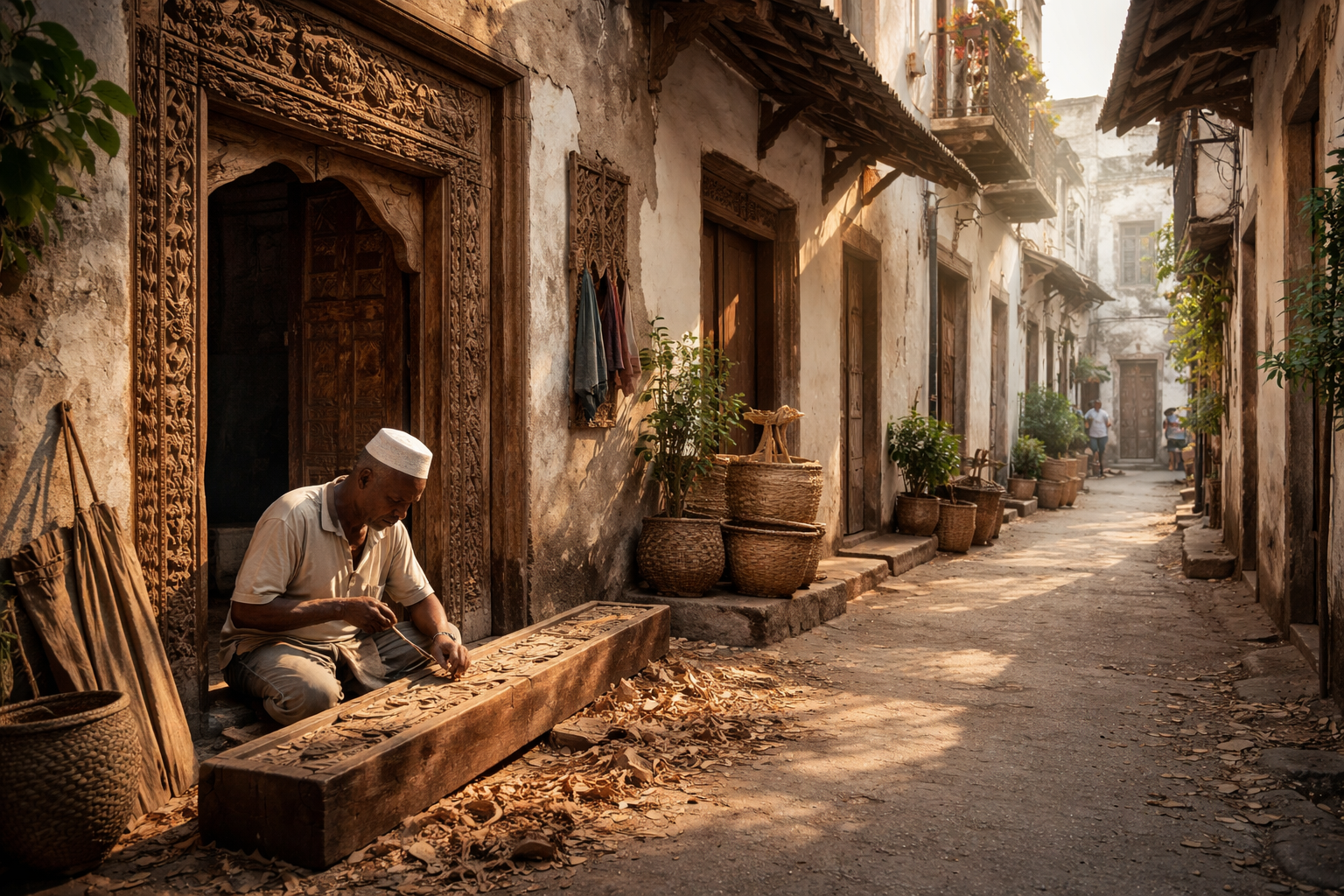
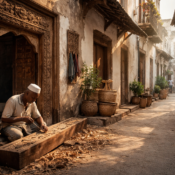
In Lamu Old Town, the sound of a chisel striking wood echoes through narrow alleys long before the shops open. Behind a carved doorway near Mkomani, Ali has been working since early morning, shaping a mangrove beam into an ornate Swahili doorframe.
“This work teaches patience,” he says, brushing away wood dust. “If you rush it, the wood will crack.”
Ali learned the craft from his uncle, who learned it from his father. For generations, wood carving has been both livelihood and identity along the coast. Today, the work continues — but under new pressures. Mangrove harvesting is tightly controlled, materials are harder to source, and cheap imported replicas have flooded the market.
What keeps workshops like Ali’s alive is not volume, but intention.
Visitors who take time to walk through Lamu’s backstreets begin to understand that these crafts are not souvenirs. They are the result of skill passed down through families, shaped by coastal life and Islamic design traditions. When travelers buy directly from artisans or commission work, the value stays where it belongs.
Across the channel on Manda Island, Asha runs a small weaving collective from her compound. Using palm leaves and recycled materials, she and other women create baskets and mats sold locally and to visiting travelers. The income pays school fees and reduces reliance on seasonal fishing, which has become increasingly unpredictable.
“Fishing is not what it was,” Asha explains. “This work gives us another way.”
These small enterprises form a quiet but resilient economic network. Boat builders crafting traditional dhows in Matondoni, tailors sewing kanzus and buibuis, spice traders blending cloves and cardamom for local kitchens — each plays a role in sustaining the coastal economy beyond tourism’s high seasons.
Entrepreneurship here is rooted in place. Materials are sourced locally. Knowledge is shared within families and communities. Waste is minimal because resources are limited and valued.
Tourism becomes meaningful only when it respects this rhythm.
Experiences that connect travelers directly with artisans allow stories to be told honestly — about craft, climate pressures, changing markets, and survival. There is no performance. Just work being done, as it has always been.
Grey Impala Safaris supports coastal experiences that introduce travelers to artisans and small entrepreneurs in places like Lamu, prioritising respectful engagement and direct community benefit. By connecting visitors with makers rather than mass outlets, travel helps preserve both craft and livelihood.
Along the coast, sustainability does not announce itself. It lives in careful hands, shared knowledge, and businesses built to last rather than scale too fast.
In Lamu, the future of travel can be found not in grand attractions, but in workshops, courtyards, and the people who continue to shape the coast — one careful movement at a time.