
Choosing between a safari lodge and a tented camp in Kenya is not really a choice between comfort and adventure. Both can be comfortable, luxurious, family-friendly, and close to excellent wildlife. The real decision is about how you want the safari to feel when you are not in the vehicle.
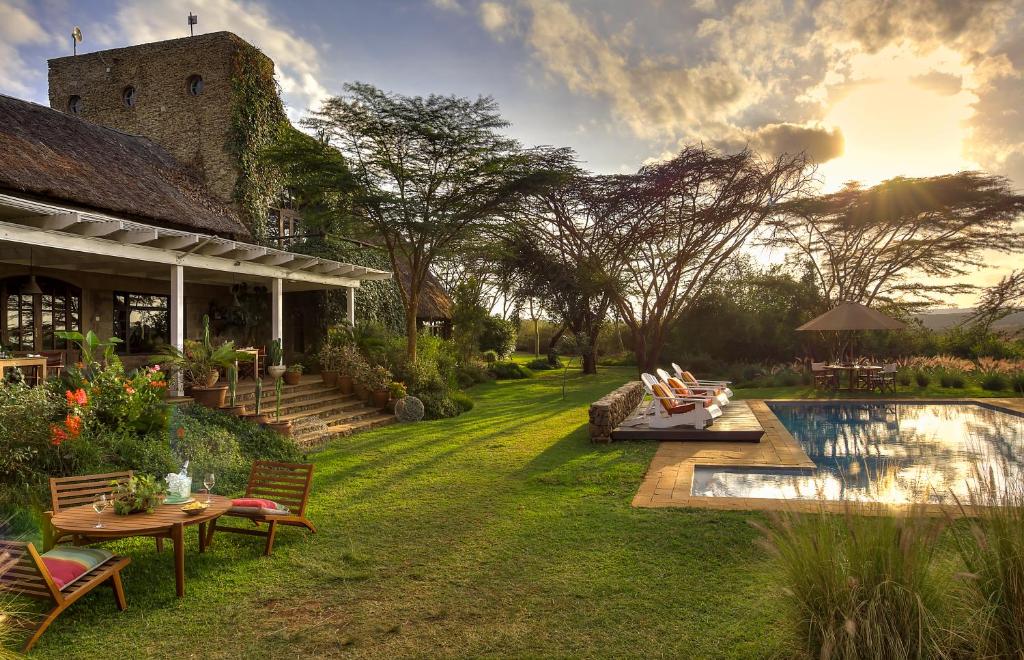
If you prefer solid walls, larger shared facilities, and a hotel-like sense of convenience, a lodge is often the easier fit. If you want to hear more of the bush, stay in a smaller property, and feel more connected to the landscape, a tented camp may suit you better. The best safari accommodation is the property that fits your route, travel style, and wildlife priorities.
TL;DR
Lodge: stronger fit for familiar comfort and larger facilities. Tented camp: stronger fit for atmosphere and intimacy. Best overall choice: compare the specific property, its location, and what is included. A tented camp can be more luxurious than a lodge, and a lodge can be more remote than a camp.
Table of Contents
Quick answer: should you choose a safari lodge or tented camp in Kenya?
Neither is automatically better. Choose a safari lodge if you value solid walls, larger shared facilities, predictable convenience, and an easy fit for families or first-time safari travelers. Choose a tented camp if you want a smaller-scale stay that feels closer to the bush. In both cases, location, management, guiding, and the specific room category matter more than the label.
A Kenya safari is often planned around parks, wildlife, and game drives. Accommodation can feel like a secondary decision until you realize that it shapes every morning, meal, sunset, and night of the trip.
The key point is simple: a tented camp is not the same as basic camping, and a lodge is not automatically more luxurious. Kenya has simple lodges, high-end lodges, comfortable permanent tented camps, and very luxurious canvas suites. Compare the actual property, not just the category name.
What is a safari lodge in Kenya?
A safari lodge is generally a permanent accommodation property built with solid structures such as stone, timber, brick, or concrete. Rooms may be individual cottages, bandas, or units connected to a central building. Lodges often have larger restaurants, lounges, pools, family rooms, and other shared facilities, although the exact amenities vary widely by property and location.
For many travelers, a lodge feels familiar in the best possible way. You still wake up inside a wildlife area or near a reserve, but the room experience can resemble a small resort or boutique hotel.
A lodge can be especially appealing when you want easy access to a pool, more indoor space, a stronger sense of separation from outdoor sounds, or room layouts that work well for children and multi-generational groups.
What is a tented safari camp in Kenya?
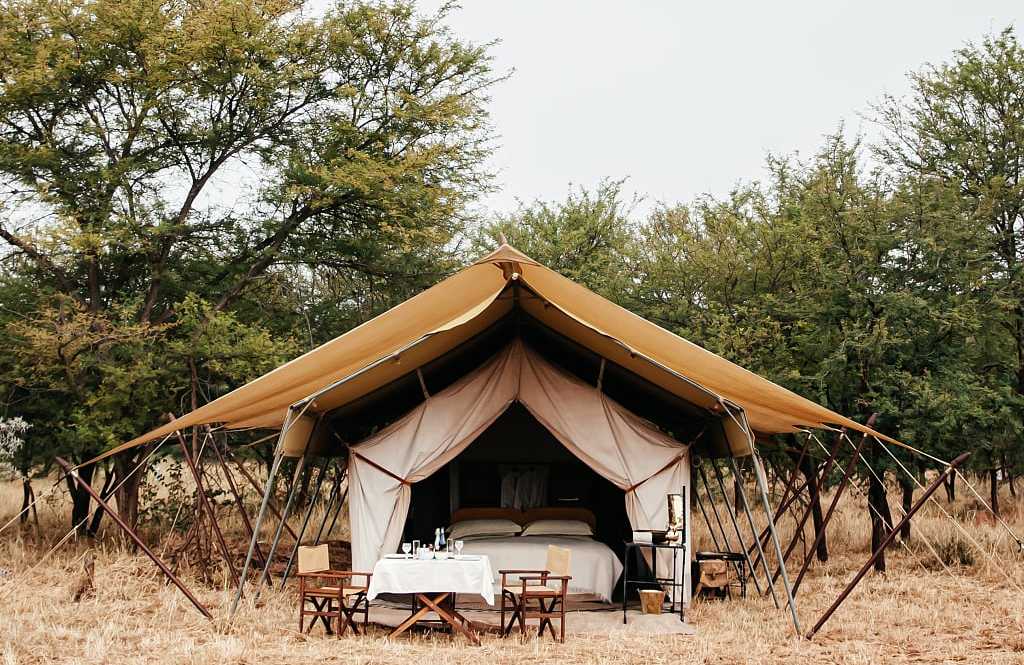
A tented safari camp uses canvas as a defining part of the guest accommodation, but that does not mean sleeping in a small camping tent. Many permanent camps have raised decks, real beds, en suite bathrooms, hot showers, electricity, charging points, furniture, and private verandas. Some luxury tented camps also include plunge pools, Wi-Fi, and high-end dining.
The main difference is the sense of connection to the environment. Canvas lets more of the bush enter the experience through sound and atmosphere. At night, you may hear insects, birds, wind, or distant wildlife more clearly than you would inside a solid-walled room.
Some camps are permanent and operate for most or all of the year. Others are seasonal or mobile. If you are comparing camps, check the exact tent design, bathroom setup, power hours, security procedures, and distance between tents rather than assuming every camp works the same way.
Safari lodge vs tented camp in Kenya: key differences at a glance
The practical difference is not luxury versus budget. It is usually structure, scale, atmosphere, and the type of comfort you prefer. Lodges tend to feel more like permanent hospitality properties. Tented camps tend to keep you more aware of the surrounding landscape. Both can offer excellent food, service, guiding, and wildlife access.
| Factor | Safari lodge | Tented camp |
| Room structure | Solid-walled rooms, cottages or bandas | Canvas-based rooms, often on platforms or permanent foundations |
| Bush atmosphere | Immersive, but usually more insulated | Often stronger sound and visual connection to the bush |
| Shared facilities | Often larger or more numerous | Often smaller and more intimate |
| Family convenience | Frequently strong, especially with family rooms and pools | Can be excellent, but age policies and tent layouts vary |
| Privacy | Varies from large lodges to private villas | Often fewer rooms, but spacing varies by camp |
| Noise from nature | Usually more muted indoors | Usually more noticeable through canvas |
| Luxury level | Ranges from simple to ultra-luxury | Ranges from simple to ultra-luxury |
| Price | Not automatically cheaper or more expensive | Not automatically cheaper or more expensive |
Important: These are tendencies, not rules. Always compare the exact property and room category.
Which is better for comfort?
A lodge is often the safer choice if your definition of comfort includes solid walls, larger bathrooms, more climate control, broad common areas, and resort-style amenities. A tented camp can be equally comfortable in terms of bedding, food, bathrooms, and service, but the experience is deliberately closer to the outdoors. Comfort depends on the individual property, not the word ‘tent’.
If you sleep lightly, ask about nighttime temperatures, generator or solar power schedules, distance from communal areas, and whether the room has fans or other cooling options. If mobility is a concern, ask about steps, uneven paths, raised decks, and how far your room is from the dining area.
For a first safari, a well-run lodge can make the transition into the bush feel easy. For travelers who already know they enjoy natural sounds and smaller properties, a tented camp can feel more memorable.
Which gets you closer to wildlife?
A tented camp can feel closer to wildlife because canvas transmits more sound and many camps are designed with fewer physical barriers between the room and the landscape. However, the best wildlife access comes from location. A strategically placed lodge near productive game-viewing areas can outperform a beautiful camp that requires long transfers before each game drive.
When comparing properties, look at where they sit relative to park gates, conservancy areas, rivers, migration routes, or the game-viewing zones you care about. Also ask whether game drives are private or shared, how many guests are assigned per vehicle, and whether the property is inside a reserve, inside a conservancy, or outside a protected area.
This is one reason accommodation should be chosen together with the itinerary. The room is only one part of the safari. Drive times, guiding quality, vehicle setup, park rules, and the season can affect your wildlife experience just as much.
Which is better for families with children?
For many families, a lodge is the easiest default because it may offer family rooms, interconnecting units, swimming pools, larger dining areas, and more space between game drives. Tented camps can also be excellent for families, especially older children who enjoy the adventure, but parents should confirm minimum ages, walking policies, room configurations, and nighttime escort rules before booking.
Ask four practical questions before you decide: Can children sleep in the same unit as the parents? Is the property fenced or unfenced? Are there age limits for walking safaris or certain game drives? How far is the room from the main area?
A private safari vehicle can also make a bigger difference to a family trip than the accommodation type. It gives you control over departure times, comfort breaks, and the length of each game drive.
Which is better for couples and honeymooners?
Tented camps often suit couples who want privacy, atmosphere, and a stronger sense of place, especially when the camp has only a small number of guest tents. Lodges can be equally romantic when they offer secluded cottages, private decks, spa treatments, or exceptional views. For a honeymoon, choose the specific room and setting rather than assuming canvas is always more romantic.
A useful comparison is to ask what you want to remember most. If it is falling asleep to the sounds of the bush and waking to sunrise from a private deck, a tented camp may be ideal. If it is a pool, spa, spacious suite, and more polished resort facilities after long game drives, a lodge may suit you better.
Which option is better for your budget?
Do not use ‘lodge’ and ‘tented camp’ as price categories. Both range from value-focused to premium and ultra-luxury. Safari cost is influenced by season, park or conservancy location, room category, meal plan, included activities, transfer method, and whether game drives are private or shared. Compare the total safari value, not the nightly room rate alone.
A more expensive camp may include activities or transfers that would cost extra elsewhere. A lower nightly rate may sit farther from the best game-viewing area and add driving time. During peak migration months and holiday periods, demand can also have a major effect on accommodation pricing.
Ask for a side-by-side quote that uses the same route, vehicle standard, park fees, meal plan, and number of game drives. That is the cleanest way to see what you are actually paying for.
Planning a Kenya safari and unsure where to stay? Send Grey Impala Safaris your travel dates, group size, budget range, and preferred parks. We can compare suitable lodge and tented camp options within the same itinerary.
Does the season change which accommodation is best?
Yes. Weather can change how a lodge or tented camp feels, especially at night and early in the morning. In cooler or wetter periods, travelers who prefer more insulation may lean toward a lodge. In dry, mild conditions, an open, airy tented camp can feel ideal. Always check the specific property’s design because permanent tented camps can be very weatherproof and comfortable.
Season also changes wildlife movement and demand. If you are planning around the Great Wildebeest Migration, accommodation location in and around the Masai Mara becomes particularly important. The best choice is the property that supports your wildlife goals without creating unnecessary daily transfer time.
Where do lodges and tented camps work best in Kenya?
Both accommodation styles work across Kenya’s major safari regions. The right choice depends on the landscape, your route, and what you want to do each day. In the Masai Mara, location can be crucial for game viewing and migration planning. In Amboseli, views and access matter. In Tsavo, long distances make efficient positioning especially valuable.
Masai Mara:
If wildlife density and migration activity are priorities, start with location and game-drive access, then compare room style. Grey Impala Safaris offers a destination overview and related itineraries for planning the Mara portion of a trip.
Amboseli:
The park is known for large elephant herds and the Mount Kilimanjaro backdrop. Kenya Wildlife Service lists both lodges and camps among accommodation options, showing that both formats are normal choices in the same ecosystem. You can also compare Grey Impala Safaris Amboseli packages.
Tsavo:
Distances can be significant, so choosing a lodge or camp that reduces backtracking can improve the overall safari. Kenya Wildlife Service lists both lodges and tented camps in Tsavo East. Coastal travelers can also review road safaris from Mombasa.
Can you combine a lodge and a tented camp on one safari?
Yes, and for many travelers this is the strongest option. A mixed itinerary lets you enjoy the convenience of a lodge in one destination and the intimacy of a tented camp in another. It also adds variety to a multi park trip without changing the core safari experience of guided game drives, wildlife viewing, and full board meals.
For example, you might choose a lodge in Amboseli for views, a tented camp in the Masai Mara for atmosphere, and a lodge or camp in Tsavo based on the route back to the coast. A mixed plan is especially useful on longer Kenya safari holidays because each property can be selected for what it does best.
How to choose: 5 questions to ask before booking
Choose your accommodation by answering five questions about comfort, atmosphere, wildlife access, group needs, and total trip value. These questions are more useful than asking whether lodges or camps are generally better. Once you know your priorities, a safari planner can compare specific properties that match your route and budget.
1. How much do you value solid walls, indoor quiet, air conditioning or fans, and larger shared facilities? 2. Do you want the bush to feel very close, including natural sounds at night?
3. Are you traveling with young children, older relatives, or anyone with mobility needs? 4. Is the property in the right location for the game-viewing areas and activities you care about? 5. What is included in the total price, including meals, transfers, game drives, park fees, and optional activities?
Best decision rule
Choose the property that improves the full itinerary. A perfect room in the wrong location can cost you valuable safari time, while a simpler property in the right place can make game drives easier and more rewarding.
Final verdict: lodge or tented camp?
Choose a safari lodge if you want familiar physical comfort, larger facilities, and an easy first-safari setup. Choose a tented camp if you want a more intimate connection to the landscape and you are comfortable hearing more of the bush around you. If your itinerary allows it, combining both often gives you the best sense of Kenya’s range.
The most important rule is to compare specific properties. A well-located, well-managed lodge is better than a poorly located camp, and a thoughtfully designed tented camp can be more luxurious than many lodges.
Grey Impala Safaris plans tailor-made Kenya safaris around your travel style, route, budget, and preferred level of comfort. If you are deciding between two or three properties, contact our safari planning team and ask us to compare them in the context of the full itinerary, not just the room photos.
Frequently asked questions
Are tented camps in Kenya safe?
Reputable tented camps follow property-specific safety procedures and commonly use staff escorts after dark in wildlife areas. Guests should always follow the camp briefing, avoid walking alone where prohibited, keep food out of rooms when instructed, and respect wildlife distance rules.
Do tented camps have private bathrooms?
Many permanent tented camps in Kenya have en suite bathrooms with toilets, sinks, and hot showers. Facilities vary from camp to camp, so confirm the exact room category before booking.
Are safari lodges cheaper than tented camps?
Not necessarily. Both lodges and tented camps range from value to ultra-luxury. Season, location, inclusions, room type, and game-drive arrangements can affect the final safari price more than the accommodation label.
Is a tented camp good for a first safari?
Yes, if you like being close to nature and are comfortable with more outdoor sounds. First-time travelers who prefer a familiar hotel-style environment may find a lodge easier, but many first-time safari guests love permanent tented camps.
Which is better in the Masai Mara, a lodge or tented camp?
Neither is universally better. In the Masai Mara, location, game-drive access, season, vehicle arrangements, and the specific property are more important than whether the room has solid walls or canvas.
Can children stay in tented safari camps?
Often yes, but age limits and room arrangements vary. Some camps restrict young children or certain activities. Families should confirm minimum ages, family tent layouts, fencing, escort policies, and game-drive rules before booking.