
Last updated: Sep 5 2026 | Reading time: 12 minutes
SHORT ANSWER
Kenya has no national legal minimum age for a safari. Individual camps and lodges set their own limits, most commonly 5, 6, 8 or 12 years. Ages 8 to 12 suit a full safari best. Children under 5 travel well with a private vehicle, shorter game drives and a lodge chosen for families rather than for honeymooners.
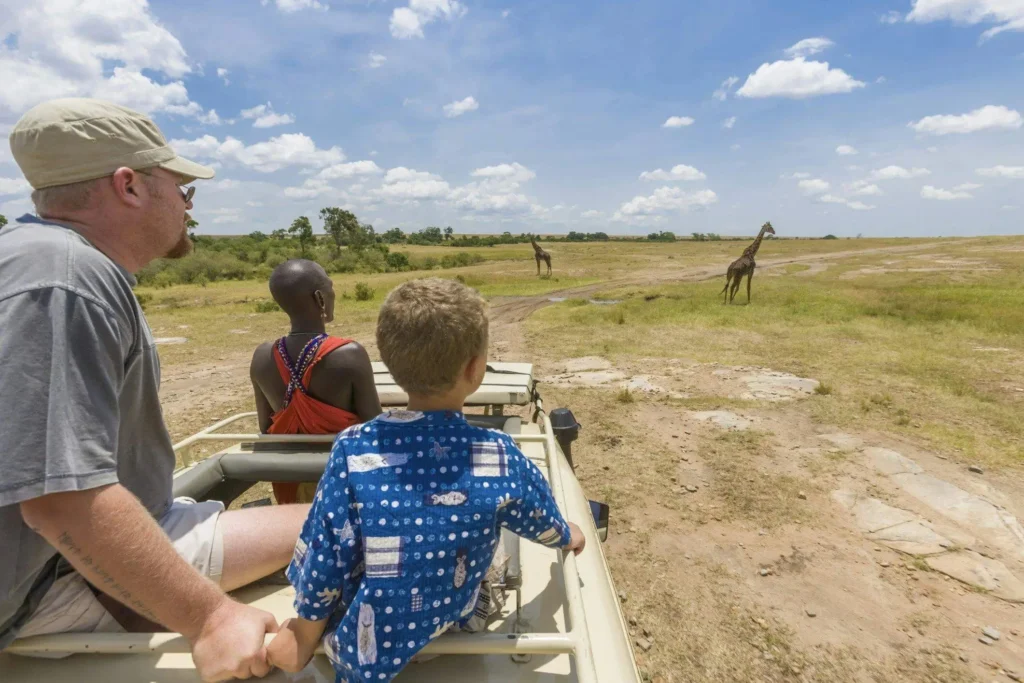
A Kenya safari can be an exceptional family trip, but a good itinerary for adults is not automatically a good itinerary for children. The biggest differences are usually not the wildlife or the destination. They are the pace of the trip, time spent in the vehicle, how flexible the guide can be, and whether the lodge is set up for families.
For many families, children aged about 7 and older are the easiest fit for a classic Kenya safari because they can handle longer game drives and understand wildlife rules. Younger children can still have a wonderful safari, but the itinerary usually needs shorter drives, a private vehicle, fewer hotel changes, more downtime, and carefully selected accommodation.
In This Guide
Is Kenya a Good Safari Destination for Families?
Yes. Kenya is one of the strongest family safari destinations in Africa because families can combine major wildlife areas, private 4×4 game drives, short internal flights, city stays, and Indian Ocean beaches in one trip. The key is to design the itinerary around the youngest traveler rather than asking children to follow an adult safari schedule.
Grey Impala Safaris already offers road safaris, fly-in options, wildlife safaris, and bush-and-beach combinations, which gives families room to trade cost, comfort, and transit time according to their children’s ages and travel style.
Useful trip-planning pages: Kenya Safari Holidays | Wildlife Safari Tours in Kenya | Safari and Beach Holidays
What Is the Best Age for a Kenya Safari?
For most first-time family safaris, ages 7 to 12 are a particularly easy range because children can usually stay engaged on longer drives, understand instructions, use binoculars, keep a wildlife checklist, and enjoy the educational side of a guided safari. That is a planning recommendation, not a legal minimum age.
| Child age | Practical fit | Best itinerary style | Main watch-outs |
| 0-3 | Possible, but high-planning | 1-2 parks, private vehicle, family room, generous lodge time, fly longer sectors | Naps, feeding, heat, mosquito protection, medical access, lodge rules |
| 4-6 | Good with the right pace | Short private drives, 2-night minimum stays, wildlife-rich parks with easy sightings | Attention span, toilet breaks, early starts, long transfers |
| 7-12 | Excellent for most families | Classic 4×4 safari, 2-4 parks, optional bush-and-beach finish | Avoid packing every day with dawn-to-dusk driving |
| 13+ | Very flexible | Most standard safari itineraries, longer drives, photography, culture, selected active experiences | Activity-specific minimum ages can still apply |
Babies and toddlers: ages 0-3
A safari with a baby or toddler is possible, but it is a specialist itinerary rather than a standard safari with a small passenger added. The trip should minimize long road sectors and repeated packing. A lodge with family rooms, reliable meals, shaded common areas, flexible meal times, and clear access to medical assistance matters more than squeezing in another park.
- Use a private vehicle so you can return to camp when the child is tired or unsettled.
- Avoid planning every day around a very early departure and a long afternoon drive.
- Ask exactly what child restraint or seat arrangement the safari vehicle can provide.
- Confirm whether the lodge accepts infants and whether shared game drives have a minimum age.
- Choose fewer bases and stay longer at each one.
Young children: ages 4-6
Ages 4 to 6 can be a very rewarding safari window when drives are short and interactive. A two-hour wildlife drive can be much more successful than forcing a child through four or five hours because adults want to maximize sightings. The best guides involve children with tracks, bird colors, animal sounds, maps, and simple wildlife challenges.
School-age children: ages 7-12
This is the sweet spot for many family safaris. Children are old enough to follow safety instructions and often become deeply engaged in wildlife behavior, conservation stories, photography, and guide-led learning. Families can usually combine parks more comfortably, although private guiding is still valuable because it keeps the pace flexible.
Teenagers: age 13+
Teenagers can usually handle the rhythm of a conventional safari and may enjoy photography, conservation-focused visits, cultural experiences, and longer game drives. However, activity-specific rules can still apply to guided walks, balloon flights, certain camps, or specialist experiences. Ask before building the itinerary around one activity.
Kenya Wildlife Service publishes child park-entry categories, but individual lodges, camps, shared vehicles, and activities can set their own age limits. Grey Impala should confirm each family booking against the exact properties and experiences used in the itinerary.
How Safe Is a Kenya Safari With Kids?
A professionally guided safari can be very safe for families when adults and children follow park rules, respect wildlife, and choose transport and accommodation that fit the child. The most important safety behavior is simple: treat wildlife as wild, follow the guide immediately, and do not turn the safari vehicle into a play space when animals are nearby.
Wildlife and game-drive rules
Kenya Wildlife Service safety guidance for national parks includes staying in the vehicle except in designated areas, keeping doors closed, moving slowly and quietly, staying on established roads and trails, and maintaining distance from wildlife. KWS park pages also list a 40 km/h maximum park speed and a 20-metre wildlife viewing distance.
- Children should remain seated or safely positioned when the vehicle is moving. Do not allow a child to lean outside the vehicle near wildlife.
- Keep voices low when the guide asks for quiet.
- Never feed wildlife or encourage animals to approach the vehicle.
- Only leave the vehicle where the guide or park rules allow it.
- Keep snacks, loose items, and favorite toys secure so they do not fall from the vehicle.
Ask about the vehicle before you book
Safari vehicles vary. Some are closed 4×4 Land Cruisers with pop-up roofs, while others may have different seating arrangements. Parents should ask what seat configuration will be used, whether the vehicle is private or shared, how many passengers it carries, what child restraint options are available, and whether the guide can stop for toilet or comfort breaks.
For younger children, a private vehicle is often the single most useful upgrade because it gives the family control over start time, drive duration, snacks, bathroom stops, and when to return to camp.
Health planning matters as much as wildlife safety
Parents should discuss the trip with a pediatrician or travel-health clinician well before departure. The CDC Kenya traveler guidance recommends being up to date on routine vaccines and notes malaria risk in many Kenyan areas, including game parks below 2,500 metres. The right malaria-prevention plan depends on itinerary, age, weight, medical history, and the medication considered.
- Arrange a travel-health consultation at least several weeks before departure. Carry prescription medicines in original packaging plus enough for delays.
- Use mosquito avoidance measures recommended for the child’s age.
- Pack oral rehydration supplies, sunscreen, hats, and a small first-aid kit.
- Know the nearest suitable clinic or hospital for each part of the itinerary.
- Consider travel insurance that includes medical treatment and evacuation appropriate to remote travel.
Medical disclaimer
This article provides general travel-planning information, not medical advice. Vaccine, malaria, and medication decisions for children should be made with a qualified clinician using the family’s exact itinerary and health history.
How Long Are the Drives on a Kenya Family Safari?
Road transfers in Kenya can be part of the experience, but parents should plan for real travel time rather than map distance alone. Traffic leaving Nairobi, roadworks, weather, rough access roads, park gates, stops, and the location of the lodge can all change the day. For younger children, one long transfer can be manageable; several long transfers in a row can make the whole safari feel exhausting.
| Common route | Typical planning time | Family planning note |
| Nairobi to Masai Mara | About 5-6 hours to common eastern gates | Long for young children. Consider an early departure, breaks, or a fly-in sector. |
| Nairobi to Amboseli | About 4-5 hours | Reasonable for many families if it is the main transfer of the day. |
| Nairobi to Lake Naivasha | About 1.5-2.5 hours depending on city traffic | Good first stop after Nairobi or a lighter transfer day. |
| Nairobi to Samburu | About 5.5-7 hours | Better for school-age children and teens, or replace with a flight if budget allows. |
| Mombasa to Tsavo East | About 2-3 hours to common access areas, longer from some coastal hotels | One of the easiest bush add-ons from the coast, especially for a short family safari. |
Planning note: These are approximate itinerary figures, not guarantees. Confirm the exact lodge, park gate, pickup point, current road conditions, and stops at the time of booking.
When should families fly instead of drive?
Flying is worth considering when the road sector would consume most of the day, when a child struggles with long car journeys, or when the itinerary is already short. A flight can convert a transfer day into a wildlife day, although it costs more and baggage limits can be tighter.
- Under 6: strongly consider flying the longest sectors if budget allows.
- Ages 7-12: mix road and air so children still experience Kenya’s landscapes without spending the whole trip in transit.
- Teens: longer road sectors are usually easier, especially if there are scenic or cultural stops. Beach-to-Masai Mara: a fly-in safari is usually far more family-friendly than a long overland transfer from the coast.
Grey Impala example: 2 Days Fly-in Masai Mara Safari From Diani/Mombasa
Which Kenya Safari Parks Work Best With Children?
The best park for a family is not simply the park with the most famous name. For children, the strongest choice often combines reliable wildlife viewing, manageable transfers, comfortable accommodation, and enough flexibility to stop before everyone is tired.
Amboseli: excellent for elephants and a shorter Nairobi transfer
Amboseli is a strong family choice because wildlife is often visible in open landscapes and elephant sightings can be memorable even for younger children. Grey Impala describes the road trip from Nairobi as about 4 to 5 hours and also offers fly-in options from the coast and Nairobi.
Masai Mara: exceptional wildlife, but plan the transfer carefully
The Masai Mara is one of Kenya’s most rewarding wildlife destinations, but the road journey from Nairobi is long enough to matter for families. A private road safari works well for many school-age children. Families with younger children or limited time may prefer to fly from Nairobi or the coast.
Tsavo East: practical from Mombasa and Diani
Tsavo East is especially useful for families already staying on the Kenyan coast. Kenya Wildlife Service lists Bachuma Gate at about 110 km from Mombasa, and many safari operators plan roughly 2 to 3 hours from Mombasa to common Tsavo East access areas depending on traffic and pickup location. That makes a short bush-and-beach combination easier to manage than a coast-to-Mara road trip.
Lake Naivasha: a useful low-transit break in a longer itinerary
Naivasha works well when a family wants to break up longer road sectors, spend time by the lake, or add a lighter activity day between major wildlife areas. It is much closer to Nairobi than the Mara or Samburu, which can help after an international flight or before the final transfer.
How Long Should a Kenya Safari Be With Kids?
For a first family safari, four to seven nights of wildlife time is often enough to create variety without turning every day into packing, driving, and check-in. The younger the children, the more valuable it is to stay two or three nights in each place instead of moving daily.
| Family profile | Suggested safari rhythm | Example |
| With a child under 6 | 1-2 wildlife bases, 2-3 nights each, private vehicle, one major transfer or flight | Nairobi + Amboseli + beach, or coast + Tsavo East + beach |
| Children 7-12 | 2-3 wildlife areas, mix road and air, downtime most afternoons | Nairobi + Naivasha + Masai Mara + beach |
| Teens | 3-4 wildlife areas if the family enjoys active travel | Samburu + Naivasha/Nakuru + Masai Mara + coast |
A simple family rule: fewer hotel changes, better safari
Changing camp every night looks efficient on a map but can be tiring in real life. Children benefit from knowing where their room is, having time to use the pool or common area, and seeing the same guide for more than one drive. A slower itinerary also gives the family a buffer if someone needs a late morning, an early dinner, or a rest day.
What Should Parents Pack for a Kenya Safari With Kids?
Pack for sun, dust, cool mornings, warm afternoons, long vehicle hours, and limited access to shops inside wildlife areas. Keep the most important child items in a small day bag that stays inside the safari vehicle rather than in checked luggage.
- Wide-brim hats and child-appropriate sunscreen
- Light layers plus a warm fleece or jacket for early game drives
- Closed shoes plus comfortable lodge footwear
- Refillable water bottles
- Binoculars suitable for small hands
- Wildlife notebook, pencils, or a simple animal checklist
- Quiet activities for long transfers
- Snacks agreed with the guide and lodge
- Prescription medicines and basic first-aid supplies
- Mosquito protection suitable for the child’s age
- A compact power bank for phones or cameras
- A spare change of clothes in the day bag for younger children
How to Choose a Family-Friendly Safari Lodge
A lodge can change the success of a family safari as much as the park itself. Before confirming accommodation, ask practical questions rather than relying only on the label “family-friendly.”
1. Does the property accept children of your child’s age?
2. Are family rooms, adjoining rooms, or secure tents available?
3. Is the camp fenced, and what are the escort rules after dark?
4. Can meals be served earlier for children?
5. Are shared game drives subject to a minimum age?
6. Can Grey Impala arrange a private vehicle?
7. Is there a pool, lawn, activity area, or safe downtime space?
8. How far is the lodge from the park gate or airstrip?
9. What happens if a child becomes ill?
10. Are guided walks, balloon flights, and other activities age restricted?
What Parents Should Tell the Safari Planner Before Booking
A good family itinerary starts with the child’s real routine, not just the number of travelers. Share enough detail for the planner to design around your family rather than forcing you into a fixed circuit.
- Each child’s age at the time of travel
- How well they handle 3-6 hour road journeys
- Typical nap and meal timing for younger children
- Any mobility, dietary, sensory, or accessibility needs the planner should accommodate Whether you prefer private or shared game drives
- Whether avoiding very early starts matters
- Beach time, pool time, or rest days you want built in
- Your comfort level with small aircraft and baggage limits
- Your target budget and whether you would pay more to reduce road time
Frequently Asked Questions About Kenya Safaris With Kids
What is the minimum age for a Kenya safari?
There is no single nationwide minimum age for all Kenya safaris. Parks admit children, but individual camps, shared game drives, walking safaris, balloon flights, and tour products can set their own minimum ages. Always confirm the exact itinerary before paying.
Is a Kenya safari suitable for a 5-year-old?
Yes, it can be. A 5-year-old usually does best with a private vehicle, shorter game drives, fewer long transfers, family-focused accommodation, and time to rest. Avoid designing the day around adult attention spans.
How many hours should kids spend on a game drive?
For younger children, start with roughly 1.5 to 2.5 hours and adjust based on the child. Older children may enjoy longer drives. A private vehicle lets the family stop when interest drops instead of staying out for a fixed shared-drive schedule.
Is the Masai Mara good with children?
Yes. The Masai Mara offers exceptional wildlife viewing and can be excellent with children, especially school-age kids. The main planning issue is the road transfer from Nairobi, which is commonly around 5 to 6 hours to eastern gates. A fly-in option can reduce fatigue.
Is Amboseli good for a family safari?
Yes. Amboseli is a strong family option because of its elephants, open views, and relatively manageable road time from Nairobi. Grey Impala lists the road journey at around 4 to 5 hours and also offers fly-in packages.
Should we book a private safari vehicle with kids?
For families with young children, a private vehicle is usually worth considering. It gives you control over departure times, bathroom stops, snacks, drive length, and when to return to the lodge.
Do children need malaria medicine for Kenya?
It depends on the exact itinerary, the child, and clinical guidance. CDC notes malaria risk in many parts of Kenya, including game parks below 2,500 metres. Parents should use a travel-health clinician for child specific prevention and medication decisions.
Can we combine a safari with Diani or Mombasa?
Yes. A bush-and-beach itinerary is one of the easiest ways to make a family trip feel balanced. Tsavo is especially convenient from the coast, while the Masai Mara is easier to combine with Diani or Mombasa by air.
Plan a Kenya Safari Around Your Children, Not Around a Template
The best family safari is not the itinerary with the most parks. It is the one where the children stay curious, the adults are not exhausted, the road days feel manageable, and everyone has enough time to enjoy the wildlife rather than simply moving to the next stop.
Grey Impala Safaris can tailor the mix of private game drives, road transfers, fly-in sectors, family accommodation, and beach time around your children’s ages and your travel style.
Ready to plan your family safari? Request a custom Kenya safari quote from Grey Impala Safaris.