
Quick answer: The best safari parks in Kenya for families are Nairobi National Park, Ol Pejeta Conservancy, Lake Nakuru National Park, Amboseli National Park, the Masai Mara National Reserve, Lewa Wildlife Conservancy and Tsavo East National Park. Nairobi National Park suits toddlers and first-time families. Ol Pejeta suits children aged 5 to 12. The Masai Mara rewards children aged 8 and over.
Every parent planning a Kenyan safari asks the same two questions. Will my child be safe, and will they be bored?
The honest answer is that it depends far less on Kenya and far more on which parks you choose and how you sequence them.
A four year old stuck in a vehicle for nine hours will melt down. That same four year old at Ol Pejeta, watching a rhino called Baraka take a carrot from a keeper’s hand, will talk about it for years.
This guide ranks seven Kenyan parks and conservancies by how well they actually work for families with children. We look at drive times, activity variety, accommodation, wildlife density and how forgiving each place is when a small person needs a break. If you want us to build the trip for you, start with our family safari packages.
Table of Contents
How we chose these parks
We assessed every park against five criteria that matter to families.
- Travel time from Nairobi. Anything over five hours by road needs either a flight option or an overnight stop on the way.
- Wildlife density and predictability. Children lose patience quickly. A park where you see something within twenty minutes beats a park with rarer but better sightings.
- Activity variety beyond game drives. Walks, boat trips, cycling, feeding sessions and junior ranger programmes all buy you goodwill.
- Family accommodation. Family tents, connecting rooms, a pool, babysitting, flexible meal times, and minimum age policies that do not quietly exclude your children.
- Health and comfort factors. Malaria risk, altitude, road surface and distance to medical care.
Grey Impala Safaris runs family itineraries across Kenya, Tanzania, Uganda and Rwanda. The notes below come from what our guides see with real families on the ground, not from brochure copy.
Comparison table: seven parks at a glance
| Park | Best for ages | From Nairobi | Nights | Standout for children | Malaria risk |
|---|---|---|---|---|---|
| Nairobi National Park | 2 and up | 30 to 45 minutes | Day trip | Elephant nursery, giraffe feeding | Low |
| Ol Pejeta Conservancy | 5 to 12 | 3.5 to 4.5 hours | 2 to 3 | Chimpanzees, rhino tracking | Low |
| Lake Nakuru National Park | 4 and up | About 3 hours | 1 to 2 | Rhinos on short drives | Low to moderate |
| Amboseli National Park | 4 and up | 4 to 5 hours | 2 | Huge elephant herds | Moderate |
| Masai Mara National Reserve | 8 and up | 5 to 6 hours or a 45 minute flight | 3 | Big cats and Maasai culture | Moderate |
| Lewa Wildlife Conservancy | 8 and up | 4.5 to 5 hours or a 1 hour flight | 2 to 3 | Horse riding and camel walks | Low |
| Tsavo East National Park | 6 and up | 5 hours, or 2 to 3 hours from Diani | 2 | Red elephants, beach combination | Moderate to high |
The seven best safari parks in Kenya for families
1. Nairobi National Park: the best first safari for young children
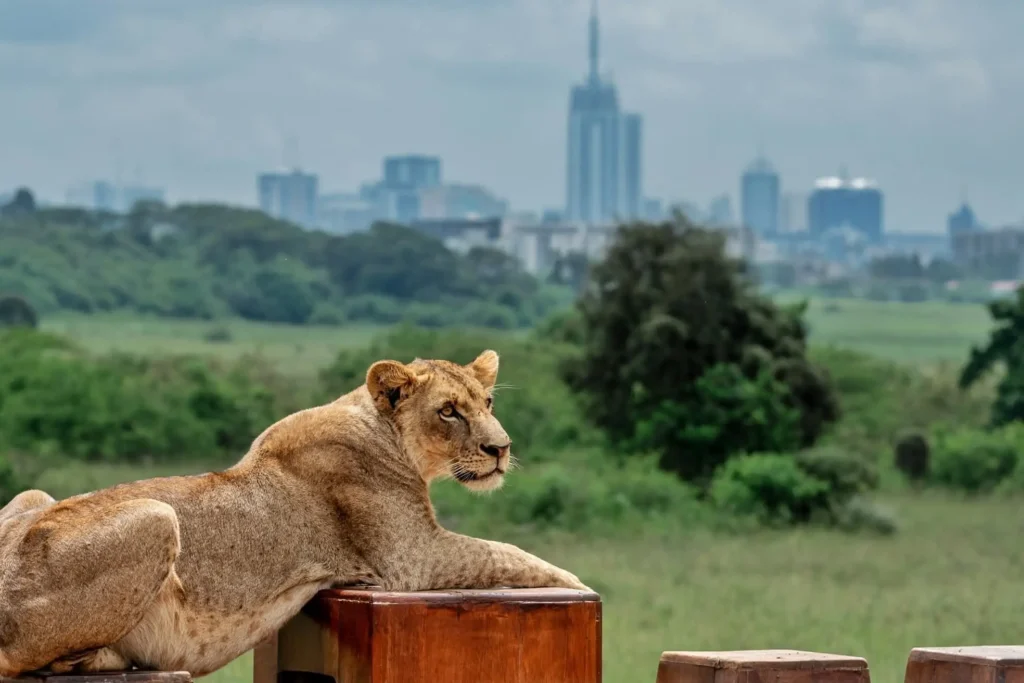
Nairobi National Park is the best Kenyan park for families with toddlers and preschoolers because it sits roughly 30 to 45 minutes from central Nairobi, needs no long transfer, and can be done comfortably in a single morning.
The park covers about 117 square kilometres and lies around 7 kilometres south of Nairobi’s central business district. It is the only national park in the world that borders a capital city. Lions, black rhino, giraffe, zebra and buffalo all live within sight of the skyline, which children find genuinely funny.
Why it works for families
- No long drive. You can be back at the hotel in time for lunch and a nap.
- It pairs neatly with the Sheldrick Wildlife Trust elephant nursery and the Giraffe Centre in one morning.
- It is the perfect jet lag buffer on day one or day two of a longer trip.
Practical notes for parents
- The Sheldrick nursery public visit runs daily from 11am to 12 noon, every day except 25 December. Booking is in advance and directly with the Trust only. Confirmations issued by third party platforms are not accepted at the gate.
- The suggested donation is US$20 per person aged 12 and above, and US$5 for children under 12. Kenya residents pay KSh 2,000 and KSh 500.
- Kenya Wildlife Service park entry is charged separately, even if you are only visiting the nursery.
- The Giraffe Centre is a separate organisation in Karen. Its raised feeding platform is usually the single biggest hit with children under ten.
Watch out for: the 11am nursery slot collides with mid morning naps for the under threes. Do the game drive first from about 6:30am, then the nursery, then go back to the hotel.
2. Ol Pejeta Conservancy: the strongest all round choice for ages 5 to 12
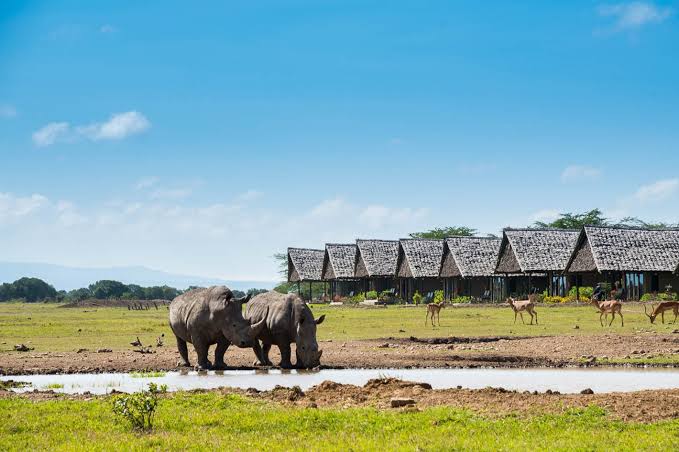
Ol Pejeta Conservancy in Laikipia is the best Kenyan safari destination for children aged roughly 5 to 12, because it combines Big Five game viewing with structured, hands on conservation activities that hold a child’s attention when a fourth hour of antelope watching will not.
Ol Pejeta covers 90,000 acres about 3.5 to 4.5 hours north of Nairobi, sitting directly below Mount Kenya. It holds the largest black rhino sanctuary in East Africa, it is home to the world’s last two northern white rhinos, Najin and Fatu, and it hosts Sweetwaters Chimpanzee Sanctuary, the only place in Kenya where you can see rescued chimpanzees.
Why it works for families
- Chimpanzees. Children who have tuned out completely will re-engage the moment the chimps appear.
- The northern white rhino experience is a booked 45 minute slot at a fixed time. That is far easier to plan a nap around than an open ended game drive.
- Lion tracking with radio telemetry turns a drive into a treasure hunt. Older children love holding the antenna.
- Gates run 7am to 7pm, entry is cashless and booked online, so there is no queuing with tired children at the gate.
Costs in 2026
- Non resident adults pay around US$110. Children aged 3 to 11 pay around US$55. Under 3s enter free.
- Kenyan citizens pay around KSh 2,000 per adult and KSh 1,000 per child. East African residents pay around KSh 3,500 per adult.
- Premium activities such as the northern white rhino visit and lion tracking run about US$70 per adult and US$35 per child.
Watch out for: some walking and tracking activities carry minimum ages. Confirm these when you book, not when you arrive at the gate.
3. Lake Nakuru National Park: short drives, big results
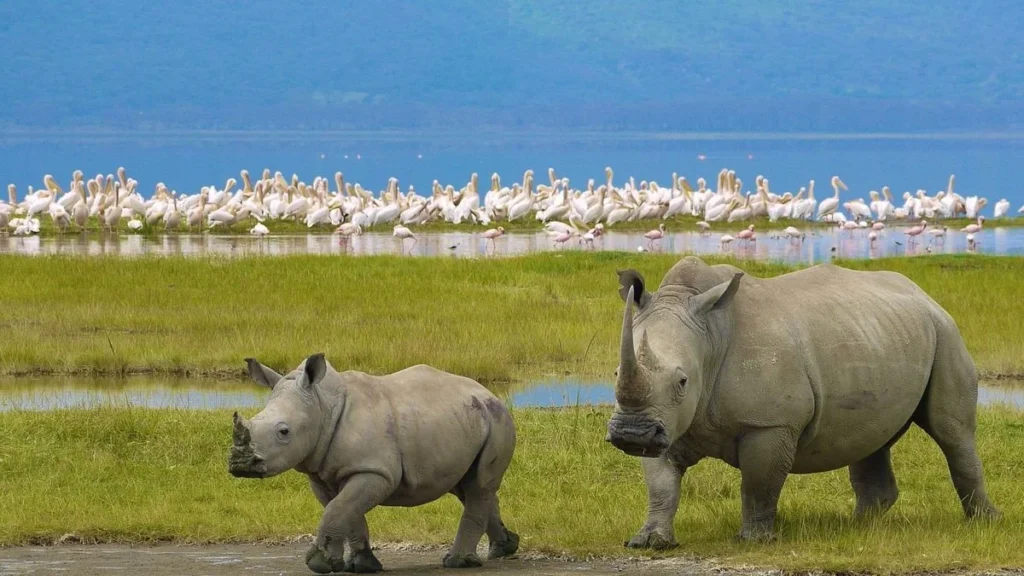
Lake Nakuru National Park suits families with children aged about 4 and up because it is compact, roughly three hours from Nairobi, and delivers rhino, giraffe, buffalo and waterbird sightings on drives that rarely need to run longer than two hours.
The park is fenced, which meaningfully raises your odds of seeing something quickly. Both black and white rhino are present, along with the tall, pale Rothschild’s giraffe. Baboon Cliff and the Out of Africa viewpoint give children a safe place to get out of the vehicle and run around.
Flamingo numbers now rise and fall with lake levels and have dropped well below their historic peaks. Treat flamingos as a bonus rather than a promise you make to your children in advance.
Why it works for families
- Two hour drives instead of five hour drives.
- It slots naturally between Nairobi and the Masai Mara, which turns one brutal road day into two manageable ones.
- Lake Naivasha is about an hour away and adds a boat trip with hippos plus a walking safari on Crescent Island, where children can walk among zebra and giraffe.
Watch out for: baboons at picnic sites will take food straight out of a child’s hands. Eat inside the vehicle with the windows up.
4. Amboseli National Park: elephants at close range
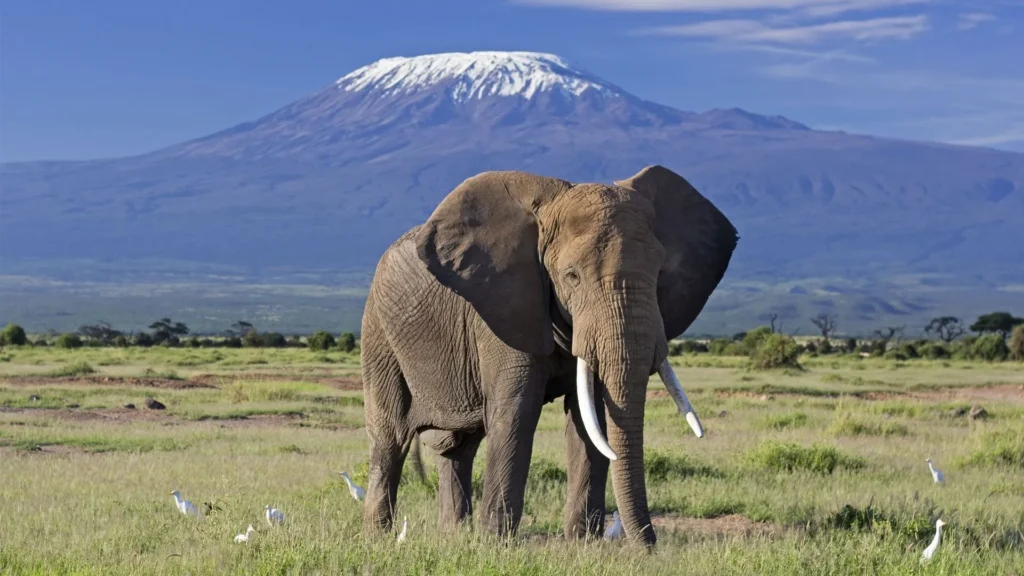
Amboseli National Park is the best Kenyan park for families who want reliable elephant sightings. Large herds cross open, treeless plains where children can watch them for long stretches without a guide having to explain what they are looking at.
Amboseli is 4 to 5 hours from Nairobi. On clear mornings and late afternoons, Mount Kilimanjaro fills the southern horizon, which makes it the most photographed backdrop in Kenya. The Kenya Wildlife Service classifies it as a premium park, so entry fees sit at the top tier.
Why it works for families
- Elephants are big, slow and close. For a child, that combination beats a leopard in a distant tree every time.
- Flat, open terrain means less bumping around and far less of the “where is it?” frustration that ruins bush drives for small children.
- Observation Hill is a short climb most children can manage, and it breaks up the day out of the vehicle.
Watch out for: dust in the dry season is serious. Pack a buff or light scarf for each child, and choose a vehicle with good suspension because some roads are heavily corrugated.
5. Masai Mara National Reserve: best for children aged 8 and over
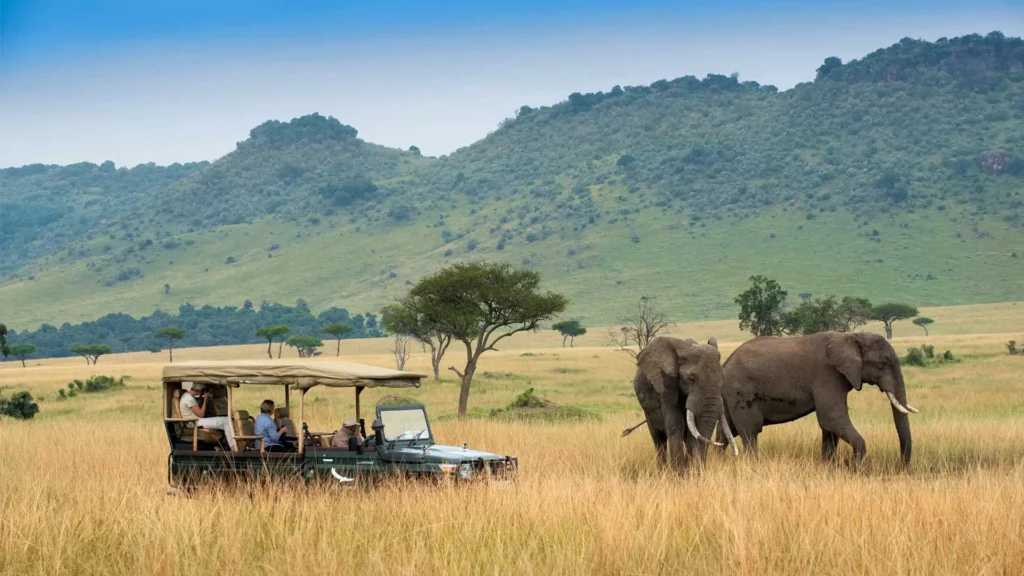
The Masai Mara National Reserve is the best Kenyan safari for children aged roughly 8 and above, once they can sit through longer drives and follow a predator sighting with real interest rather than asking when lunch is.
The Mara is managed by Narok County rather than the Kenya Wildlife Service, so its rules and fees work differently. It is about 5 to 6 hours by road from Nairobi, or a 45 to 50 minute flight from Wilson Airport. Big cat density is the highest of any Kenyan park, and wildebeest river crossings typically fall between July and October.
Fees in 2026
- Non resident adults pay about US$100 per day from January to June, and about US$200 per day from July to December.
- Children aged 9 to 17 pay about US$50 per day year round.
- Children aged 8 and under enter free, which makes a real difference to a family of five.
- Tickets carry daylight validity of roughly 6am to 6pm, and there is a 10am exit rule on your departure day.
Two decisions that change the trip
- Fly, do not drive, if your children are under ten. The road saves money and costs you a full day in each direction.
- Consider a conservancy instead of the reserve. The private conservancies that border the Mara, including Naboisho, Olare Motorogi and Mara North, allow night drives and walking safaris that the reserve does not. They cap vehicle numbers at sightings and many have dedicated family units. Conservation fees are charged separately and are usually built into the lodge rate.
Watch out for: hot air balloon operators set a minimum age and often a minimum height. Confirm this before you promise a balloon ride to a seven year old.
6. Lewa Wildlife Conservancy: best for active families and teenagers
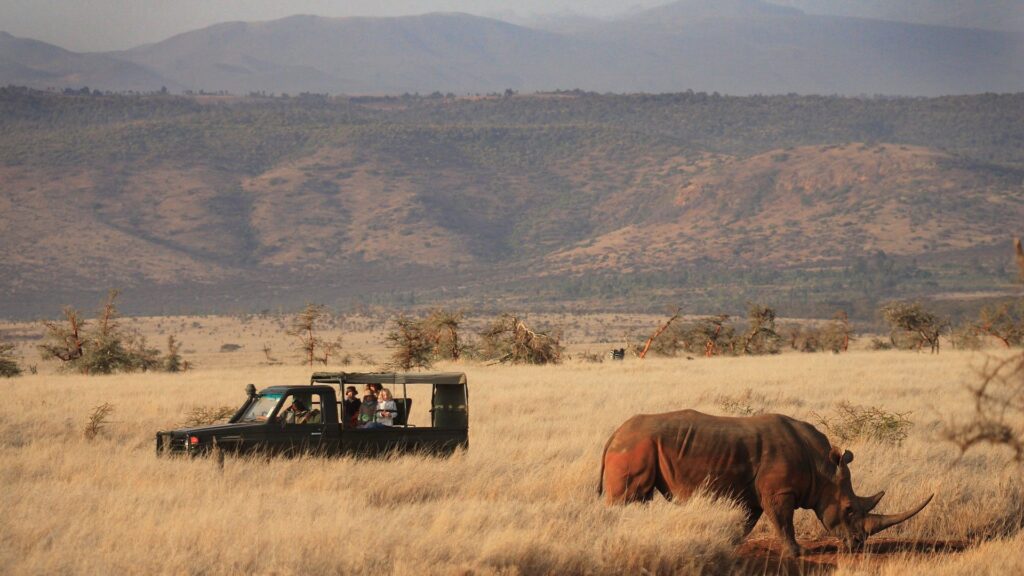
Lewa Wildlife Conservancy suits families with children aged about 8 and above who want to be out of the vehicle. Horse riding, camel walks, guided bush walks and rhino tracking all form part of a normal day here.
Lewa sits on the Laikipia and Meru border and is inscribed as part of the Mount Kenya UNESCO World Heritage Site. It protects a significant population of the endangered Grevy’s zebra alongside black and white rhino. Because of its altitude, malaria risk is low.
The houses and small camps at Lewa are frequently booked as whole family units. That means flexible meal times and no need to keep a five year old quiet in a communal dining tent, which is worth more to most parents than any single sighting.
Watch out for: Lewa is a premium destination and the pricing reflects it. Rates are typically all inclusive of activities and conservancy fees, so compare total cost rather than nightly rate.
7. Tsavo East National Park: best for a safari and beach combination
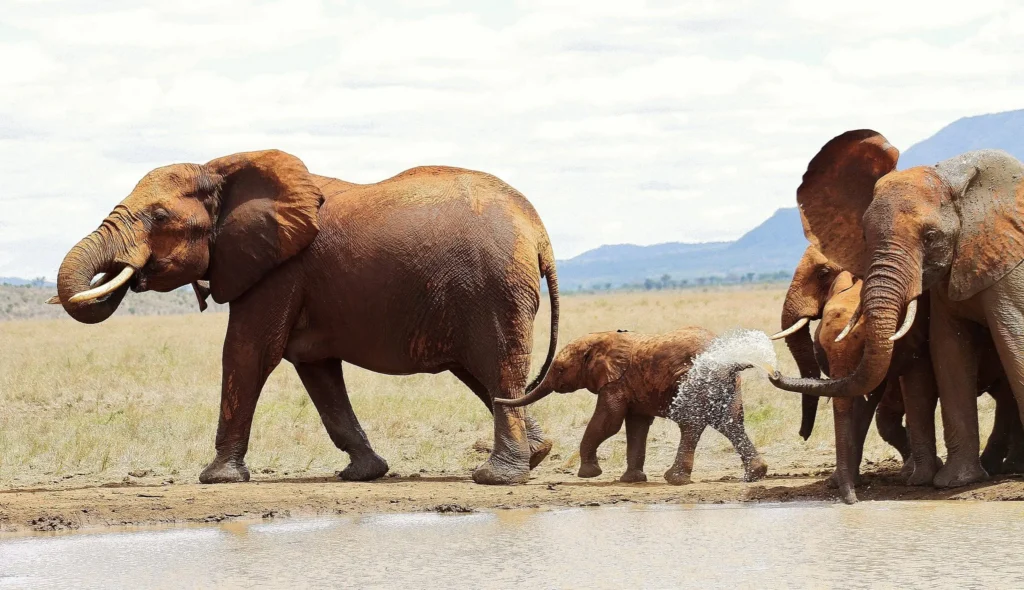
Tsavo East National Park is the best choice for families combining a safari with a beach holiday, because it sits between Nairobi and the coast and is roughly two to three hours from Diani Beach and Mombasa.
Tsavo East is one of Kenya’s largest parks and is famous for its red elephants, which take their colour from bathing in the park’s red volcanic soil. The Kenya Wildlife Service classifies it as a wilderness park, so entry fees are lower than at premium parks such as Amboseli and Lake Nakuru.
Two nights in Tsavo followed by five nights at Diani gives children something to look forward to and gives parents an actual rest at the end. It is the itinerary shape we recommend most often to families travelling with children under eight.
Watch out for: Tsavo is hot and low lying. Malaria risk is higher here and along the coast than in the highland parks. Speak to a travel clinic well before you fly.
Two more worth considering
- Hell’s Gate National Park near Naivasha, about two hours from Nairobi, is one of very few Kenyan parks where you can walk and cycle among wildlife. There are no large predators across most of the accessible area. It is excellent for children aged 6 and up who need to burn energy.
- Shimba Hills National Reserve, about an hour inland from Diani, is a short green break from the beach with sable antelope and a walk down to Sheldrick Falls.
Which Kenyan safari park suits your child’s age
Age matters more than budget when you are choosing a park. Here is how we match them on our family safari page.
Ages 0 to 3
Stick to Nairobi National Park, Ol Pejeta and Lake Nakuru. Choose accommodation with a pool and a family unit, and keep every drive under 90 minutes. Many camps set a minimum age of 6 or 8 for shared game drive vehicles, so book a private vehicle and the problem disappears.
Ages 4 to 7
Ol Pejeta, Lake Nakuru and Amboseli. At this age, structured activities matter far more than rare sightings. Junior ranger programmes, rhino feeding, the chimpanzee sanctuary and a boat trip on Naivasha will land better than three hours of patient leopard hunting.
Ages 8 to 12
Everything opens up. The Masai Mara, Lewa and Tsavo all become realistic. Children this age can handle a full day drive with proper breaks, and they are old enough to use binoculars and a species checklist without losing either one.
Ages 13 and over
Mara conservancies, Lewa, walking safaris and fly camping. Teenagers respond well to being given a job. Ask your guide to hand over the bird book, the spotlight or the camera, and they will stop looking at their phone.
Health, safety and comfort on a family safari
We are a tour operator, not a medical provider. Speak to a travel clinic or your family doctor at least six to eight weeks before you fly, and follow official guidance from the World Health Organization or your national health service for vaccinations and malaria prevention. There is more detail in our full age and safety guide.
Here is what we can tell you from running these trips.
Malaria risk varies a lot by park
Nairobi and the Laikipia highlands, which include Ol Pejeta and Lewa, sit at altitude and carry lower risk. The Masai Mara, Amboseli, Tsavo and the coast carry higher risk. Long sleeves at dusk, repellent and a treated bed net do most of the practical work, but the decision about prophylaxis belongs to your doctor.
Car sickness is the most common problem
It is far more common on family safaris than any animal encounter. Front seats where possible, cool moving air, ginger sweets, and drives capped at two hours for the under sevens will prevent most of it.
Sun and dust
Wide brim hats, high factor sunscreen and proper sunglasses. Amboseli and Tsavo are dusty enough that a buff for each child is worth packing.
Vehicle rules
Children stay inside the vehicle with hands in. Standing through the roof hatch is for stationary vehicles only. Every reputable operator briefs this on day one, and you should be worried if yours does not.
Medical access
AMREF Flying Doctors provides air evacuation cover across Kenya, and short term tourist membership is inexpensive. We recommend it for every family safari and we can arrange it as part of your booking.
Minimum ages
Many camps set minimum ages for shared game drives, walking safaris and balloon flights. Private vehicles and family units usually remove the issue entirely. Check this before you pay a deposit, not after.
Family safari packing list for Kenya
- Layers. Mornings in Laikipia and the Mara can sit near 10C while afternoons reach 30C.
- Neutral colours. Avoid bright white, and avoid dark blue and black, which attract tsetse flies.
- Closed shoes for drives and walks, plus sandals for camp.
- One pair of binoculars per child. This single item changes the entire trip.
- A wildlife checklist or sticker book. Children who are recording things stay engaged far longer.
- Refillable water bottles.
- Wet wipes, hand sanitiser, plasters and oral rehydration sachets.
- Downloaded films and audiobooks for the transfer days.
- A cheap camera each. It gives them a role.
- A universal adaptor. Kenya uses the type G three pin plug.
Frequently asked questions
What is the best safari park in Kenya for families with young children?
Nairobi National Park is the best option for families with children under five, because it is only 30 to 45 minutes from central Nairobi and can be visited in a single morning. For children aged five and above, Ol Pejeta Conservancy is the strongest choice thanks to its chimpanzee sanctuary and its short, timed conservation activities.
What is the best age to take a child on safari in Kenya?
Most families find that five to six years old is the sweet spot. At that age children can sit through a two hour game drive, remember the trip clearly afterwards, and take part in junior ranger and conservation activities. Safaris with children under four are entirely possible but need shorter drives, a private vehicle and a much slower itinerary.
Is Kenya safe for a family safari?
Yes, when you travel with a licensed operator and stay within established parks and conservancies. The genuine risks on a family safari are sunburn, dehydration, car sickness and road accidents, not wildlife. Choose accommodation with fenced family units, use a private vehicle, and take out air evacuation cover such as AMREF Flying Doctors membership.
Do children pay park fees in Kenya?
Yes, but at reduced rates, and there are free thresholds worth planning around. Children under 8 enter the Masai Mara free, and children under 3 enter Ol Pejeta free. In Kenya Wildlife Service parks, children typically pay between US$20 and US$40 per day depending on the park tier. Always confirm current rates at the time of booking.
How long should a family safari in Kenya be?
Seven to ten days is the practical range. Under seven days and you spend too much of the trip in transit relative to time in the parks. Beyond ten days most children under twelve start to tire of game drives, which is why a beach extension at Diani works so well as an ending.
Is the Masai Mara suitable for toddlers?
It is possible but rarely the best use of your money. The Mara involves long drives and long sightings, which suits children aged eight and above far better. If you are set on the Mara with a toddler, fly rather than drive, stay in a conservancy with a family unit, and book a private vehicle so you can leave a sighting when you need to.
What is the best time of year for a family safari in Kenya?
June to October offers dry weather, thinner vegetation and the best wildlife visibility, and it overlaps with the wildebeest migration in the Masai Mara. January and February are also dry and slightly warmer. April and May bring the long rains, the lowest prices and the emptiest parks, but some camps close and roads can be difficult.
Do we need a private vehicle for a family safari?
For children under ten, yes, we strongly recommend it. A private vehicle lets you start late, end early, leave a sighting when a child has had enough, and stop for the toilet without negotiating with five strangers. It also removes the minimum age restrictions that many camps apply to shared vehicles.
Can we combine a Kenyan safari with a beach holiday?
Yes, and it is the format we recommend most often for families. The usual shape is Amboseli or Tsavo East followed by Diani Beach or Watamu on the Indian Ocean coast. Tsavo East sits roughly two to three hours from Diani, so the transfer is short and the safari ends with a reward.
What vaccinations do children need for Kenya?
Requirements depend on your country of departure, your child’s age and their vaccination history, so this must come from a travel clinic rather than a travel blog. Book that appointment six to eight weeks before you fly. Yellow fever certification is sometimes required depending on your routing, so check your specific itinerary.
Plan your family safari with Grey Impala Safaris
Choosing the right park is most of the work. Getting the sequence, the drive times, the vehicle and the accommodation right is the rest of it, and that is what we do.
We build family safaris across Kenya, Tanzania, Uganda and Rwanda around your children’s ages, your dates and your budget, with park fees itemised so nothing arrives as a surprise at the gate.